about us

WELCOME TO AACT

AACT is committed to supporting individuals and families affected by Autism Spectrum Disorder. We believe that each child can use their God-given talent to reach their maximum potential, regardless of disability. We are dedicated to fostering meaningful education and independence for each child.
ABOUT AACT

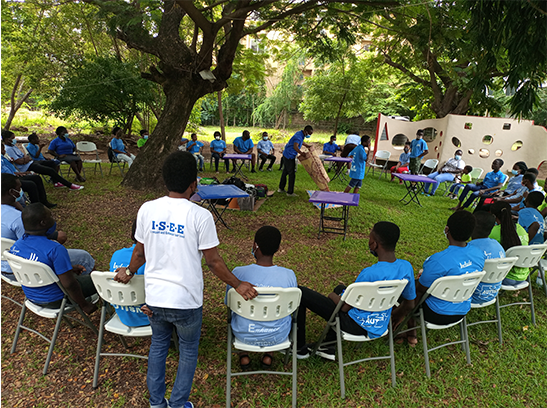
The Autism Awareness Care and Training (AACT) Centre is a pioneering non-profit organization in Ghana dedicated to transforming the lives of autistic children and their families. Established in 1998 by Mrs. Serwah Quaynor, a mother determined to create a future for her autistic son, AACT has grown from a small room at the back of her home into a nationally recognized centre of excellence and advocacy.

At AACT, we believe that autism is not a disability—it is a different ability. We therefore hold the vision to build a community that is more inclusive and sensitive to the needs of autistic persons in Ghana. Guided by this belief, our mission is threefold:

  • To support individuals and families affected by autism spectrum disorder.
  • To create local and international partnerships to include, support, educate and empower autistic persons.
  • To foster meaningful education and independence for autistic persons.

Over the past 20+ years, AACT has supported more than 600 children and their families through specialized programs, including speech and language therapy, occupational therapy, art therapy, vocational training, life skills development, and individualized education plans (IEPs). We also run awareness campaigns, parent training workshops, and community outreach initiatives to ensure that autism is understood and accepted.

Our impact has been recognized both locally and internationally, with awards such as the MTN Heroes of Change Award, the Millennium Excellence Award, and the Best Social Enterprise Award from the Association of Ghana Industries. Yet, our greatest achievement remains the transformation we see every day—in children finding their voice, families gaining hope, and communities becoming more inclusive.

At AACT, we continue to walk alongside families, advocate for change, and pioneer innovative approaches in autism care and education. Our purpose is clear: to build a society where autistic persons are respected, supported, and empowered to live meaningful lives.

AACT TEAM

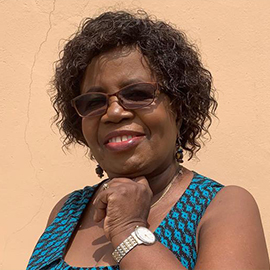
MRS. SERWAH QUAYNOR

FOUNDER/EXECUTIVE DIRECTOR

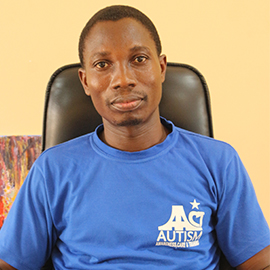
MR. GRANT ABEIKU BAIDEN

HEAD OF PROGRAMS

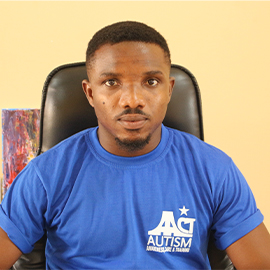
MR. JOSEPH NII LAMI LARMIE

COORDINATOR

“I am different, not less!”

Mrs Serwah Quaynor- The Executive Lounge on JoyNews

The Executive Director for the Autism Centre speaks on Autism and other relating topics on JoyNews

Autism in Ghana

A short video on Autism in Ghana by the Autism Awareness Care and Training Centre

Mrs. Serwah Quaynor

Founder & Executive Director, Autism Awareness Care & Training Centre (AACT)

Mrs. Serwah Quaynor is a pioneering voice for autism awareness and inclusion in Ghana. In 1998, inspired by her son Nortey’s autism journey, she founded the Autism Awareness Care and Training (AACT) Centre—the first of its kind in the country. What began as a small support initiative in her home has grown into a nationally recognized centre of excellence, advocacy, and hope for hundreds of children and families.

Fondly called Auntie Serwah, she has dedicated more than two decades to creating awareness, reducing stigma, and equipping families, educators, and health workers with the skills to support autistic persons. Her tireless advocacy has sparked a national movement, ensuring that autism is no longer invisible in Ghana.

Mrs. Quaynor’s leadership has earned her both national and international recognition, including the MTN Heroes of Change Award, the Millennium Excellence Award, and acknowledgment as a Change Leader with Reach for Change Africa. She is also an active member of Social Enterprise Ghana.

Beyond the awards, her greatest legacy is the impact she has made in the lives of children, families, and communities—proving that autism is not a tragedy, but a difference to be embraced.

Mr. Grant Abeiku Baiden

Head Of Programs, Autism Awareness Care & Training Centre (AACT)

Mr. Grant Abeiku Baiden has been an integral part of the Autism Awareness Care & Training Centre (AACT) since 2007. Starting as a class attendant, he has grown through dedication and service into his current role as Centre Coordinator. Over the years, he has carried out diverse responsibilities—including facilitator, gym coordinator, driver, director’s personal assistant, work practice supervisor, and trainer—always with the same commitment to transforming lives.

Abeiku’s passion is deeply rooted in advocacy and inclusion. He has championed employment opportunities for autistic individuals in Ghana, pushing boundaries to ensure their rightful place in the workforce. His impact extends to families as well—most notably, he helped a mother overcome years of stigma and fear around autism, empowering her to embrace her journey and become a trainer and advocate herself.

Respected as a pillar of AACT, Mr. Baiden’s leadership, compassion, and hands-on approach have made him a trusted figure in Ghana’s autism movement. He represents a generation of advocates who are turning awareness into action and creating lasting change for autistic persons and their families. 

Mr. Joseph Larmie

Coordinator, Autism Awareness Care & Training Centre (AACT)

Mr. Joseph Larmie has served at AACT since 2021, bringing passion, precision, and purpose to the Centre’s daily operations. His commitment to excellence and love for the work have significantly contributed to the Centre’s growth and efficiency.

Known for his eloquence, attention to detail, and supportive nature, Joseph brings warmth and humor to every interaction—making visitors, clients, and staff feel welcome and valued. Beyond administration, he is deeply committed to breaking down the stigma surrounding autism. He believes that true change begins when society takes active steps to build understanding and compassion.

Through his role, Mr. Larmie continues to ensure that AACT remains not only a place of care and training but also a beacon of awareness and acceptance. His work strengthens the Centre’s mission and reminds us all that inclusion is both possible and necessary.